Rotary Batch Parts Washers
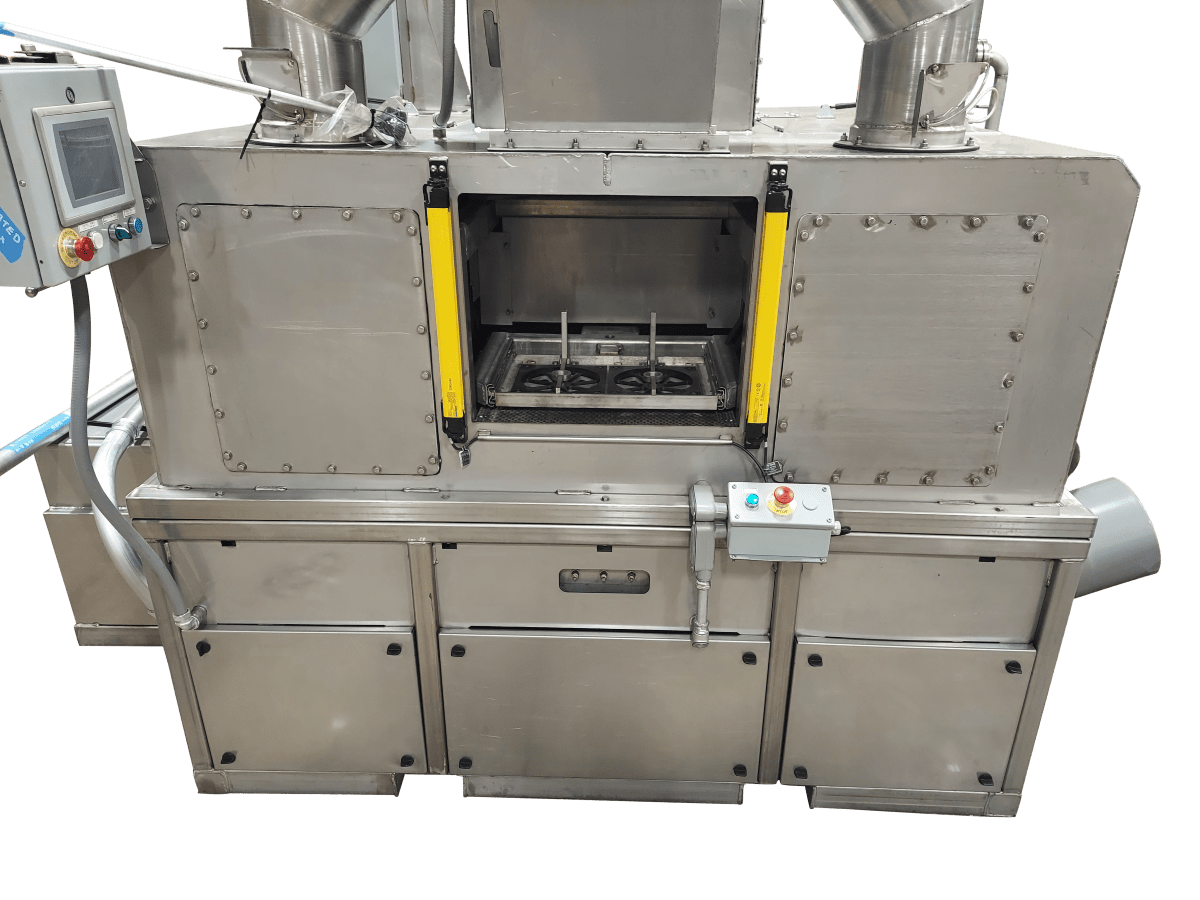
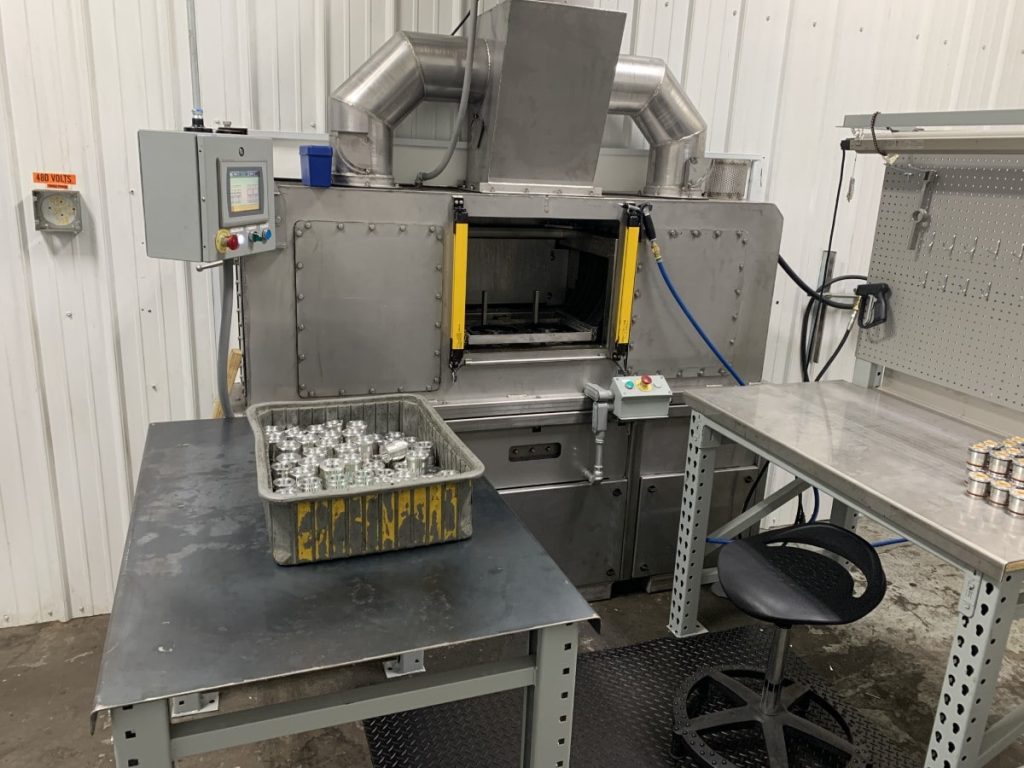
Clean hydraulic components and bored parts in a compact footprint with one operator. Inline rotary batch washers carry parts on a carousel through wash, rinse and dry stations and bring them back to the same spot for unloading. A recipe for each part sets exactly where the spray nozzle goes.
How Our Rotary Batch Washer Works
- Load: The operator places the part on the carousel at the load station.
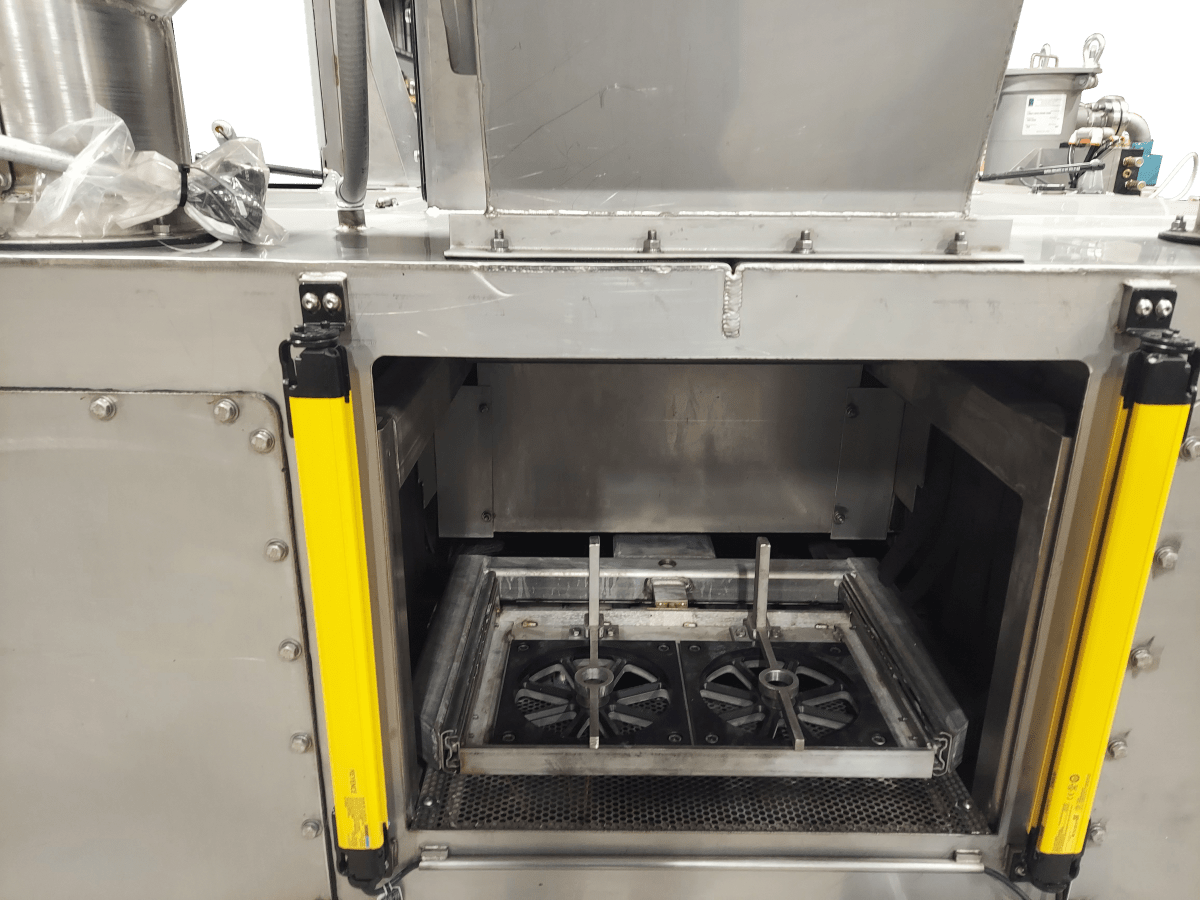
- Wash: The carousel indexes the part into the wash station. For parts with an inside bore, a servo motor drives the spray nozzle up and down the bore to the programmed height.
- Rinse: The part indexes to the rinse station to remove detergent residue. For parts with an inside bore, a servo motor drives the spray nozzle up and down the bore to the programmed height.
- Dry: The part indexes to the dry station. Air nozzles can also be inserted into bores to dry if needed.
- Unload: The part returns to the same station where it was loaded.
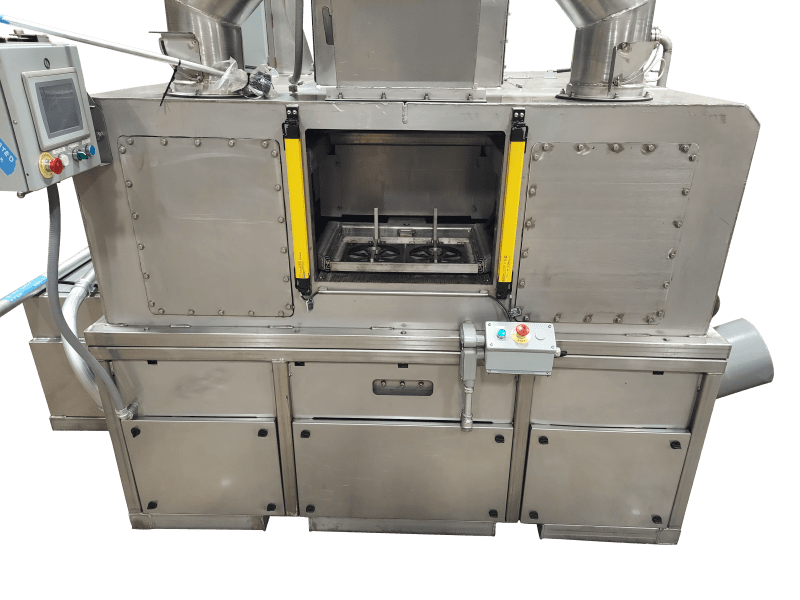
A light curtain stops the carousel from turning while the operator is loading or unloading.
Features
- Recipe function with a programmable nozzle height for each part number
- Servo-driven spray nozzles that clean inside bores, not just outside faces
- Wash, rinse and dry stations in one compact machine
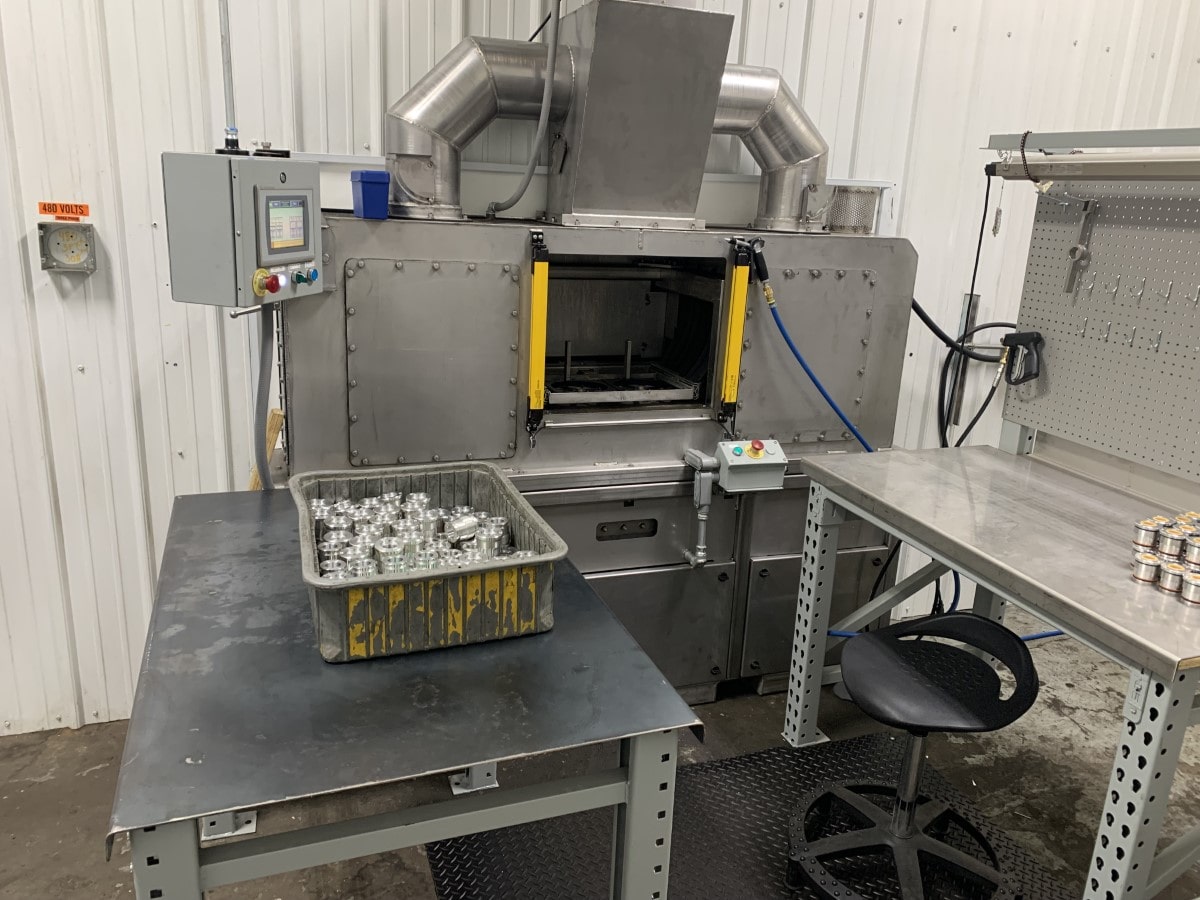
- Single operator loads and unloads from one position
- Light curtain safety on the carousel
- Closed-loop wash system and electric immersion heaters to cut water and energy use
- Rinse water reused in the wash zone where appropriate
Capacity and Sizing
| Spec | Value |
|---|---|
| Number of stations | 4: load, wash, rinse, dry |
| Max part size and weight | 24″ x 24″ x 24″, 50 lb |
| Typical cycle time per part | 10-30 seconds per part |
| Parts per hour | 120-360 |
| Footprint | 10 ft x 10 ft |
| Heating | Electric immersion standard, gas or steam available |
| Controls | PLC with touchscreen HMI and part recipes |
Parts We Clean
Hydraulic components and other parts with inside bores, complex geometry or parts that must sit in a fixture. This machine was first built for a customer cleaning a wide range of hydraulic components.
Carousel, Drum or Basket: Which Rotary Washer Do You Need?
| Type | How it works | Best for |
|---|---|---|
| Rotary carousel (index) washer | How it works: Parts sit in fixtures and index through wash, rinse and dry stations | Best for: Bored or complex parts, part-by-part recipes, one operator (this is what Inline builds) |
| Rotary drum washer | How it works: Small parts tumble through a rotating drum | Best for: Bulk small parts such as fasteners |
| Rotary basket washer | How it works: Parts in a basket rotate inside a wash chamber | Best for: Batches of parts that can be loaded in baskets |
If your parts need a continuous flow instead, see our pass-through conveyor washers. If they need robot loading, see automated parts washing systems.
Why Inline for Rotary Washers
Frequently Asked Questions
What is a rotary batch parts washer?
A rotary batch washer moves parts on a carousel through wash, rinse and dry stations and returns them to the loading position. It gives consistent results in a small footprint with one operator.
Can it clean inside bores?
Yes. A servo motor moves the spray nozzle up and down each bore to a height programmed for that part, so internal passages get cleaned, not just outside faces.
Can one washer handle different part numbers?
Yes. The recipe function stores settings for each part, so operators select the part and the machine sets the nozzle travel and cycle time.
Rotary carousel, drum or basket: which suits my parts?
Carousel washers are best for complex parts with internal features that must sit in fixtures. Drum washers are best for bulk small parts that can tumble. Basket washers are best for batches of parts loaded in baskets.
Is the rotary washer safe for operators?
A light curtain stops the carousel from turning while the operator is loading or unloading.
Can the rotary washer be automated?
Yes, robots can be integrated to handle the loading and unloading.
Get a Rotary Washer Quote
Send your part drawings, bore sizes, contaminants and target parts per hour. We will recommend the station layout and send a quote.