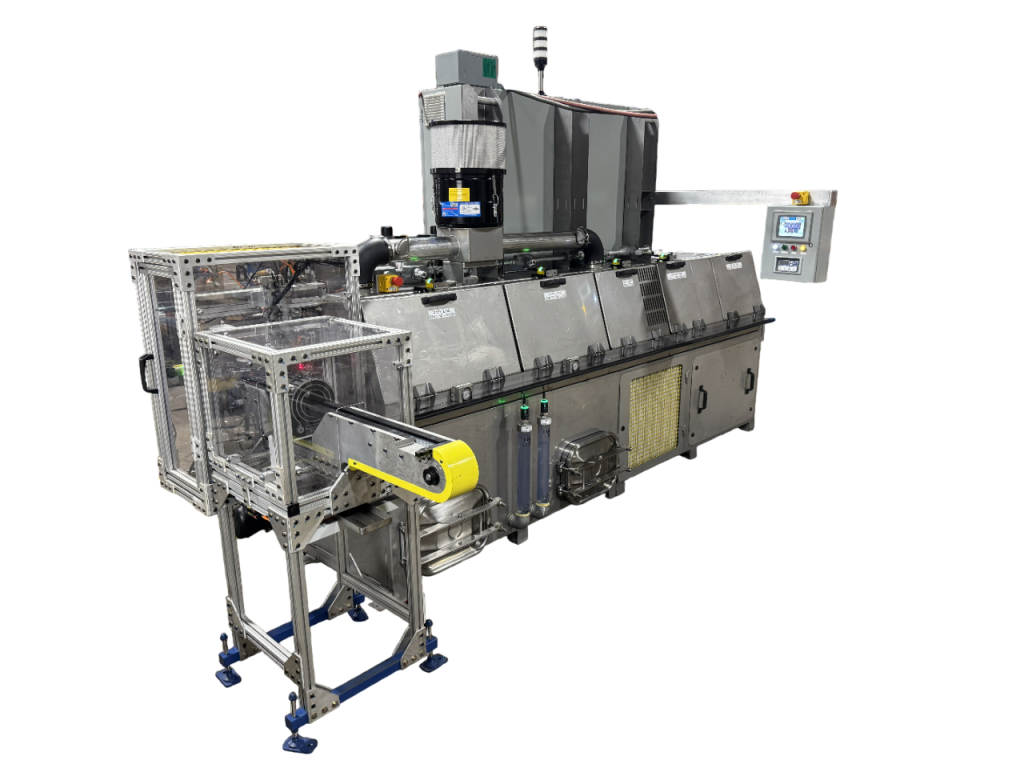
Take the operator out of the wash step. Inline designs automated parts washing systems that load, clean, dry and unload parts in step with your line, using conveyors, indexing fixtures, pick-and-place units or robots. Our engineers handle the washer, the material handling and the controls as one system.
Built for Production, Not the Bench
An automatic spray cabinet cleans a basket of parts when someone loads it and presses start. An automated parts washing system is part of your production line. Parts arrive, get cleaned to spec and move to the next operation without anyone handling them.
Levels of Automation We Build
| Level | How parts move | Typical use |
|---|---|---|
| Conveyor-fed | How parts move: Parts ride a mesh belt, rollers or chain from the upstream process through wash, rinse and dry | Typical use: Stamped, machined and ground parts at line speed |
| Indexing fixtures | How parts move: Parts sit in fixtures and index from station to station, with optional moving probes or nozzles to clean parts with complex geometry | Typical use: Gears, parts with internal features such as bores, parts that need 360-degree cleaning |
| Pick-and-place | How parts move: Pick-and-place units load parts into fixtures and unload them at the exit | Typical use: Small precision parts such as engine or hydraulic components |
| Robotic cell | How parts move: Robots load and unload the washer as part of an automated cell | Typical use: Automated cells with any robot brand, including FANUC, ABB, Yaskawa and KUKA |
Controls and Integration
- PLC-based controls with touchscreen HMI. Allen-Bradley and Siemens are our standards; however, we will also use other brands to match your plant.
- Part recipes that store settings such as temperature, line speed and nozzle travel for each part number
- Sensors that can monitor pressure, flow, temperature and water conductivity at each stage
- Light curtains and safety interlocks around moving parts and operator stations
- Control panels built and programmed in-house
- Communication with your line PLC through standard protocols, usually EtherNet/IP or Profinet
Automated Systems We Have Built
What is automated: Parts pass through a demagnetizer, a pick-and-place loads them into fixtures, they index through wash, rinse, dry and cooling, and a second pick-and-place unloads them.
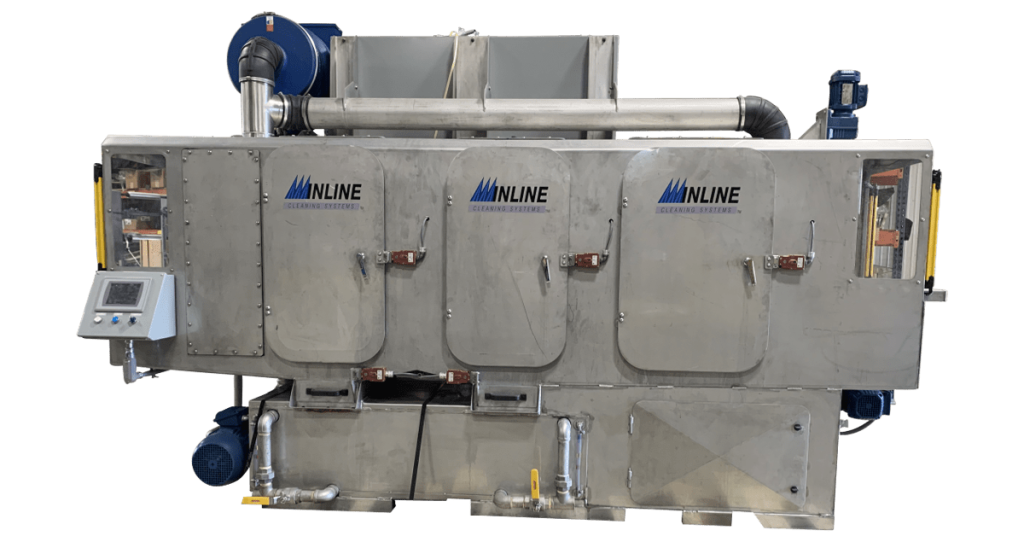
What is automated: Fixtures index parts. Probes rise to spray the bore a programmed number of times while side nozzles and air knives rotate 360 degrees.
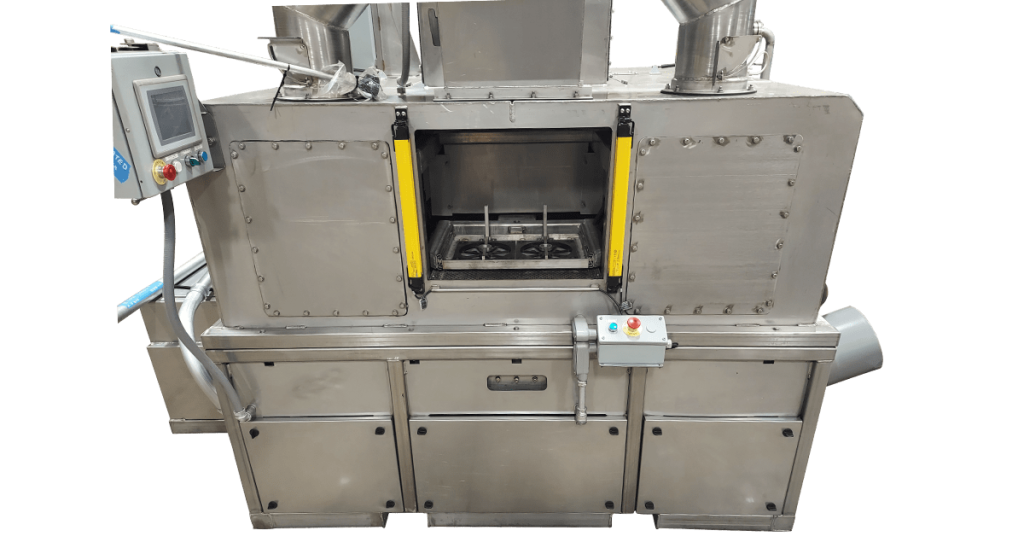
What is automated: A servo drives spray nozzles to a programmed height in each bore, set by part recipe.
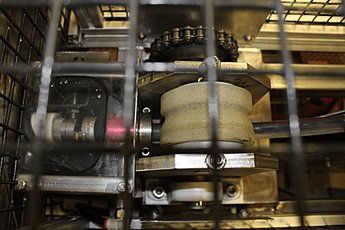
What is automated: The washer detects cylinder length and feeds a nozzle through the full bore with powered pinch rollers.
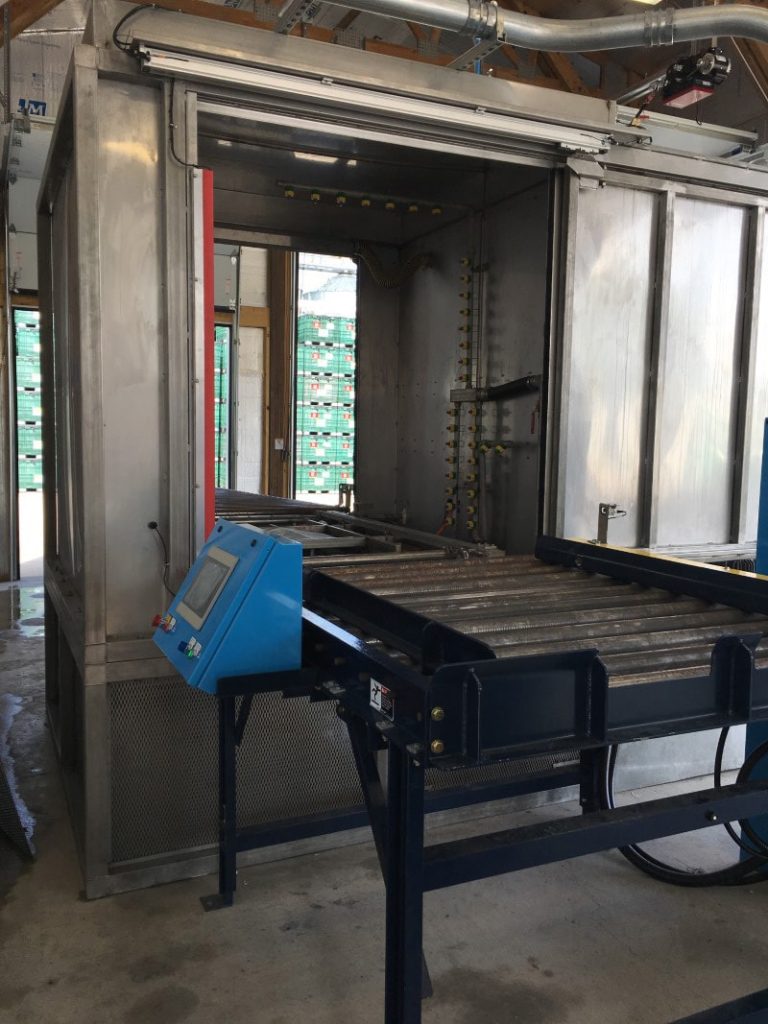
What is automated: Boxes are positioned, rotated 360 degrees on a programmed cycle and nested or de-nested automatically.
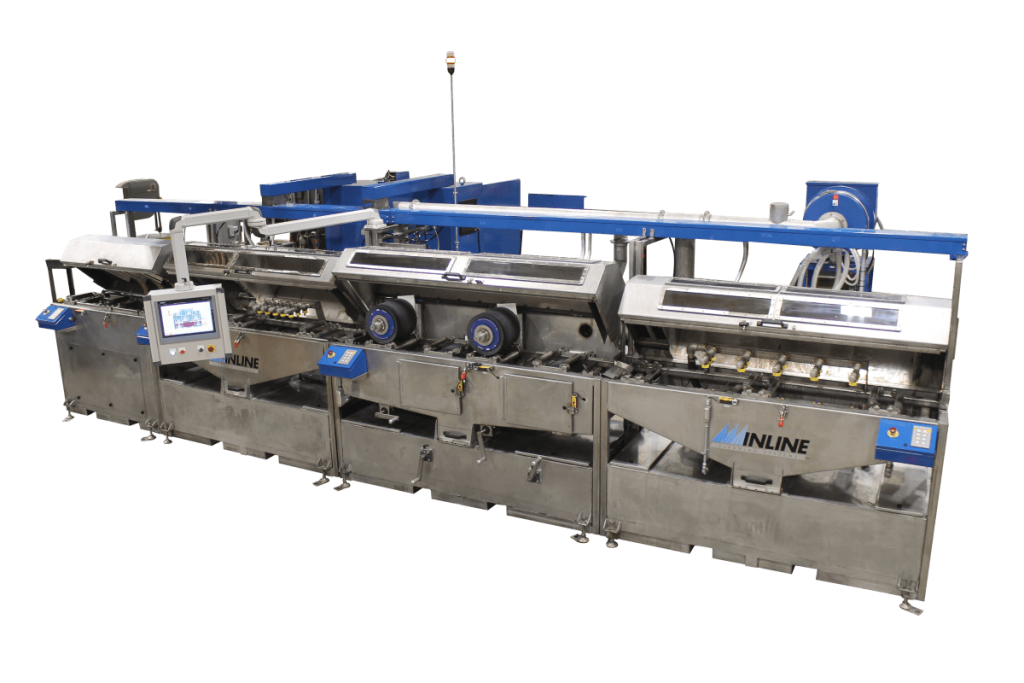
What is automated: Automated payoff and winding systems feed metal strip through wash, powered brush, rinse and dry zones inline.
Swipe to see all 6 →
Cycle Time and Throughput
We size every automated system to your takt time. We set zone lengths based on the detergent contact time your parts need and your line speed. Dry zones are sized by the passes needed to dry the part fully at that speed.
Why Automate Your Parts Washing
Every part gets the same programmed cycle.
No manual loading or unloading.
Light curtains and enclosed zones keep operators away from moving parts and hot solution.
The washer runs at the same pace as the processes around it.
Swipe to see all 4 →
Retrofit and Integration
We can connect a new washer to your existing production line. Our scope covers material handling and system integration, not just the washer.
Why Inline
Our engineering team has deep experience in machine design, factory automation, robotics, hydraulic and pneumatic design, electrical design and PLC/HMI programming. We have built parts washers since 1980, and the same team designs, builds, installs and services your system.
Frequently Asked Questions
What is an automated parts washing system?
It is a parts washer built into your production line, with automatic loading, cleaning, drying and unloading. Parts move by conveyor, indexing fixture, pick-and-place or robot, with no manual handling between stages.
How is it different from an automatic spray cabinet?
A spray cabinet runs a batch after an operator loads it. An automated system runs continuously with your line and is engineered to your parts, cycle time and cleanliness spec.
What cycle times can you achieve?
We design to your takt time by sizing zone length, spray and drying to your line speed.
Can the washer integrate with robots and our line PLC?
Yes. We build systems loaded by robots and pick-and-place units, and our controls team integrates the washer with your line. We support communication through any standard protocol, usually EtherNet/IP or Profinet, depending on the platform.
Which PLC and HMI platforms do you use?
Allen-Bradley and Siemens are our standards. We also use other brands depending on your plant standard.
Can you automate our existing washer?
In some cases, yes. Our engineers can assess your current machine and recommend whether to upgrade or replace it.
Plan Your Automated Washing System
Send your part details, target cycle time and how parts arrive and leave the wash step. Our engineers will propose a system layout and quote.